FROM RAW MATERIAL TO LIFE. A hopan information project
plastic bagproduction. Contact Hopan

THE STORY BEHIND A PRODUCT

How are
plastic bags made?

From raw material to film, from printing to cutting.
Discover the production journey of the plastic bag and the machines that make it possible.

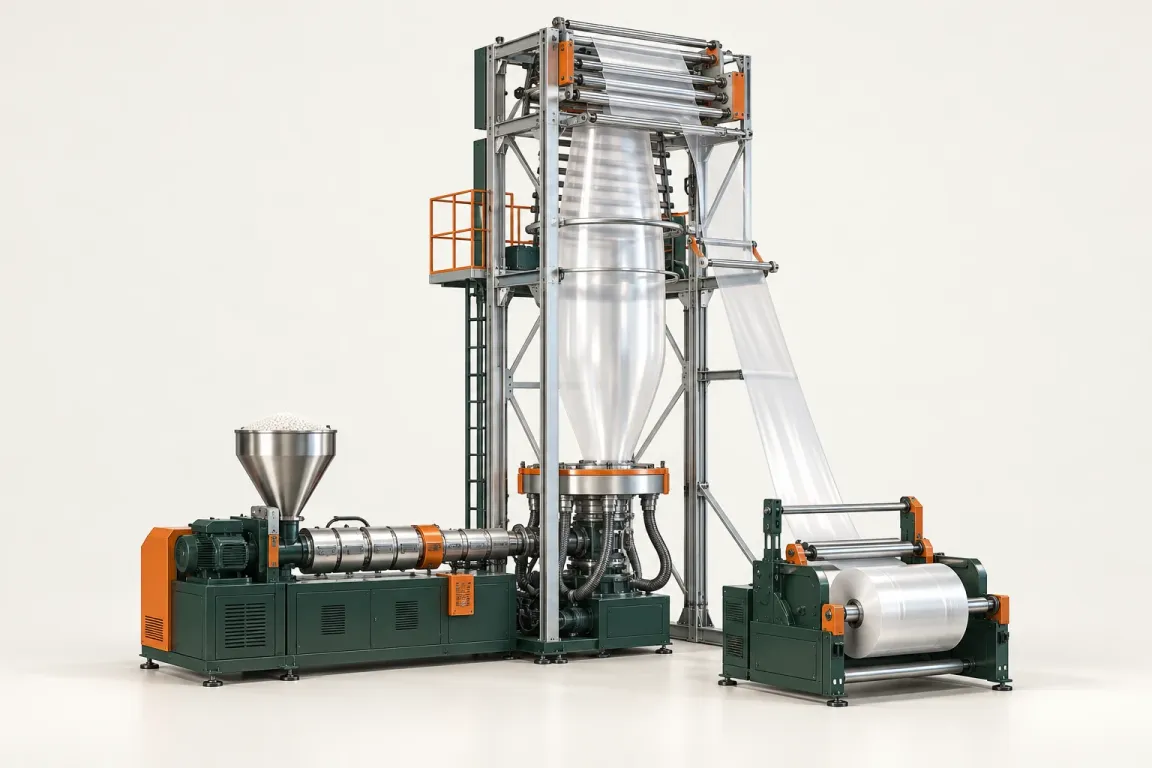
Conceptual visualization of a blown-film extrusion line with feed hopper, vertical film bubble and winder.
Representative visualization of the production process.

A Hopan and Özmak group project

It all starts with a small granule.

Behind the bag in your hand lie material selection, heat, air and a precise production process. Polyethylene granules first become film, then a bag suited to its intended use.

Let's follow this journey step by step.

01 — 05 / PRODUCTION ATLAS

From granule to bag, scroll to follow along.

Skip the scene
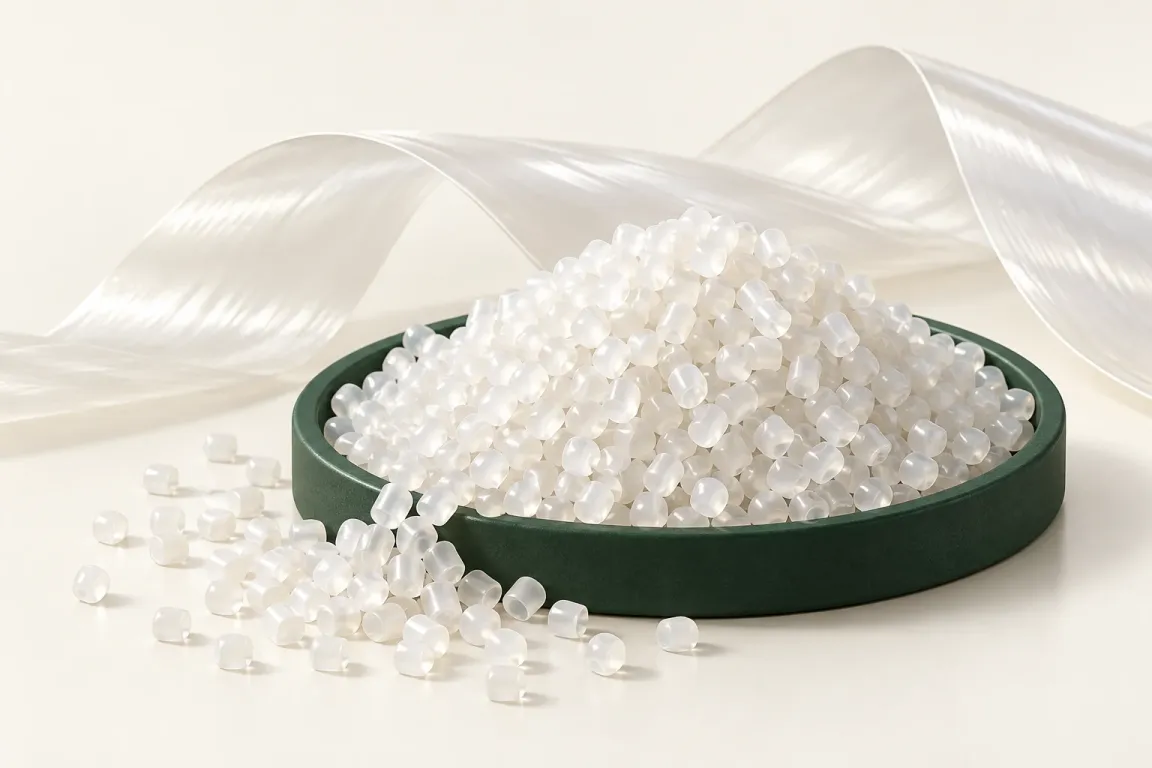
Conceptual visualization of polyethylene pellets on a dark green tray with a translucent film ribbon.
Representative visualization of the production process.

01 / Raw material

Polyethylene raw material

Production begins with choosing the right raw material for the type of bag. Plastic bag production mainly uses high-density (HDPE), low-density (LDPE) and linear low-density (LLDPE) polyethylene.

What happens to the material?
Polyethylene in granule form is selected according to the type of bag to be produced.
The machine's role
No machine is running yet: the selected granules are prepared to be fed into the extrusion line.
Explore this stage: Polyethylene raw material
Conceptual visualization of a blown-film extrusion line with feed hopper, vertical film bubble and winder.
Representative visualization of the production process.

02 / Film

Film extrusion

The granules are melted and pushed through a circular die to form a continuous tube. Air is blown into the tube; the melt inflates like a balloon, is cooled into a thin plastic film and wound onto a roll.

What happens to the material?
The granules melt and become first a tube, then a bubble, and finally a thin film.
The machine's role
A blown film extrusion line produces and winds the film. Single-layer and multi-layer versions are available.
Explore this stage: Film extrusion
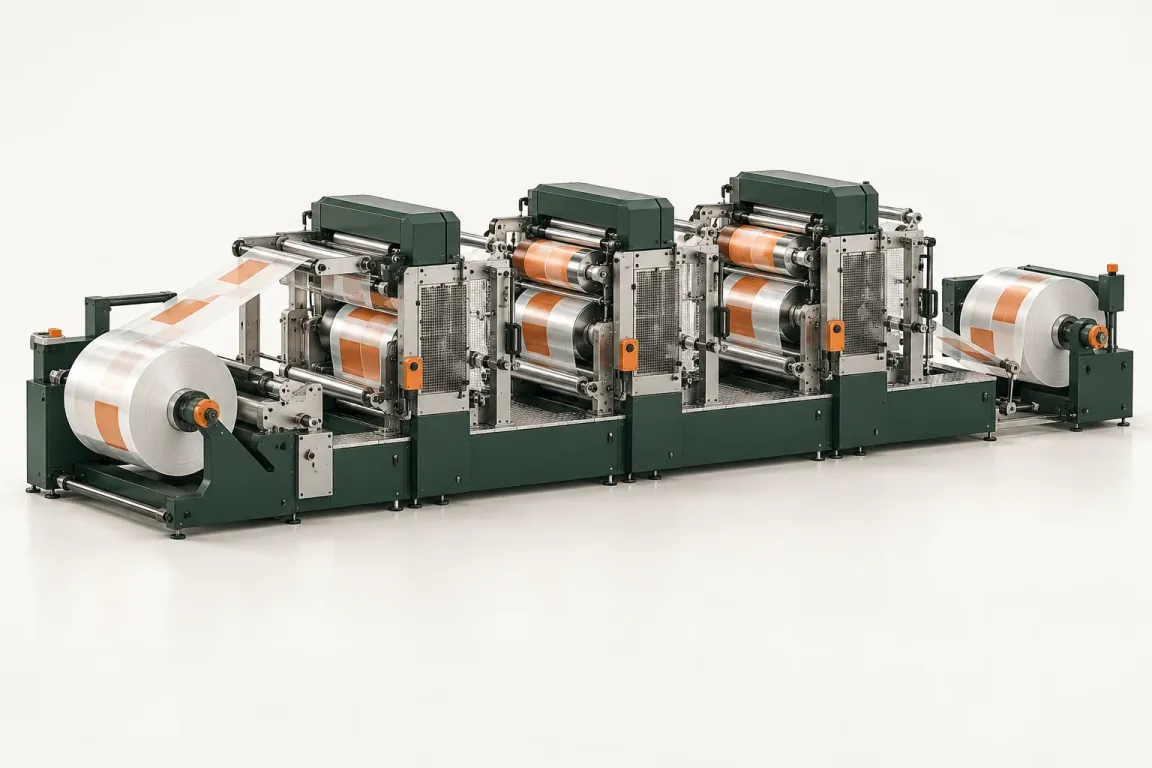
Conceptual visualization of a roll-to-roll flexographic printing line with orange abstract printing.
Representative visualization of the production process.

03 / Printing · Optional

Flexographic printing

If a logo, brand name or technical information is needed on the bag, the film goes through printing. When an unprinted bag is preferred, this stage is left out of the production process.

What happens to the material?
The film on the roll is printed on its surface and rewound.
The machine's role
A flexographic printing machine transfers the desired design onto the film surface.
Explore this stage: Flexographic printing
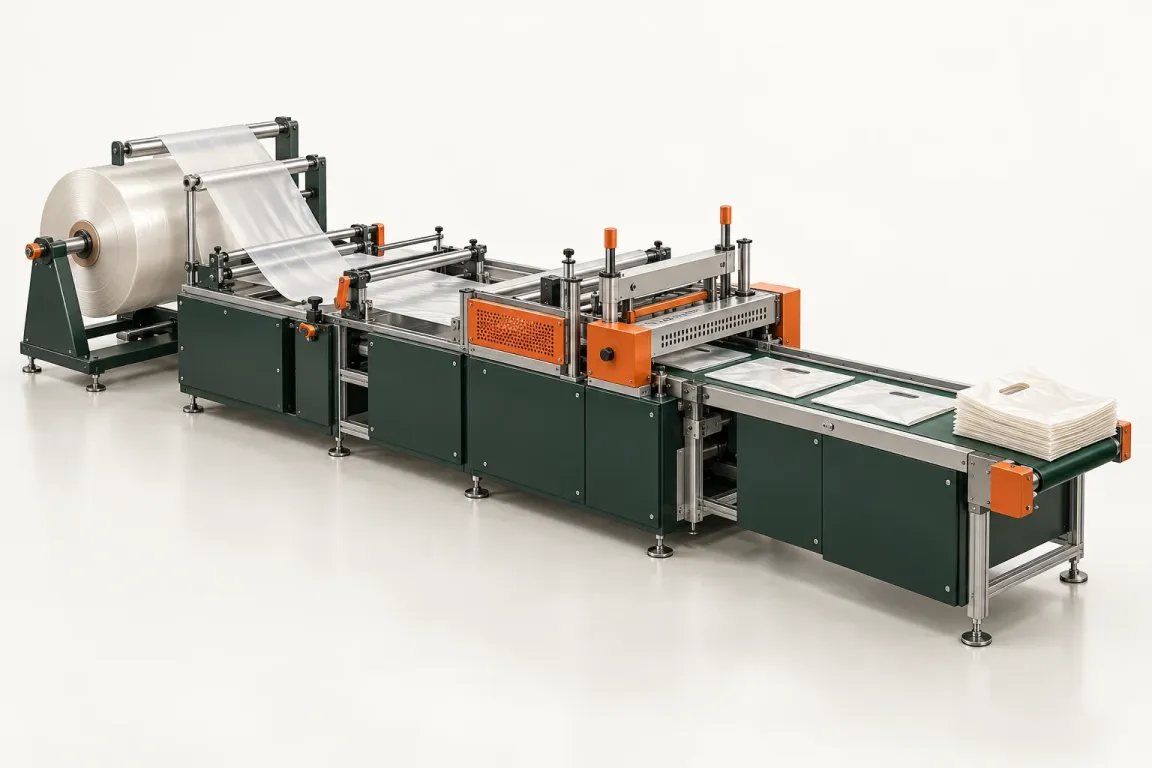
Conceptual visualization of a plastic bag cutting and heat sealing line with finished bags at its output.
Representative visualization of the production process.

04 / Cutting and sealing

Cutting and sealing

The printed or unprinted film roll arrives at the bag cutting machine. Depending on the type of bag, the film is cut, sealed and given any special treatments needed to make it ready for use.

What happens to the material?
The continuous film is separated into individual bags; the edges are joined by sealing.
The machine's role
The bag cutting machine cuts and seals according to bag type, such as T-shirt bags or soft-loop handle shopping bags.
Explore this stage: Cutting and sealing

05 / Inspection

Inspection & end product

In the final stage, the bag's dimensions, seal seams and any printing are checked. Bags that pass are packed and become ready for everyday use.

What happens to the material?
The film is now a bag ready for use.
The machine's role
At the end of the line, the bags are inspected, counted and packed.
Explore this stage: Inspection & end product

RAW MATERIAL & MACHINERY

Two distinct roles in the same journey.

Hopan and Özmak are companies of the same group; this site covers the raw material and machinery sides together.

Conceptual visualization of polyethylene pellets on a dark green tray with a translucent film ribbon.
Representative visualization of the production process.
(opens in a new tab)

RAW MATERIAL SUPPLY

Know your raw material

Polyethylene raw material: HDPE · LDPE · LLDPE

Plastic bag production begins with choosing the right raw material for the type of bag. Hopan is part of this first step: it supplies high-density (HDPE), low-density (LDPE) and linear low-density (LLDPE) polyethylene raw material. Contact Hopan for your plastic raw material needs.

Conceptual visualization of a plastic bag cutting and heat sealing line with finished bags at its output.
Representative visualization of the production process.
(opens in a new tab)

MACHINE MANUFACTURING

Explore the production lines

Machines: film extrusion · bag cutting · recycling

The machines that turn raw material into film and film into bags are Özmak's field: blown film extrusion lines, bag cutting machines and recycling machines that reprocess production scrap. For these machines, you can contact Öz-mak Plastik Makina, Türkiye's leading manufacturer, exporting to more than 80 countries around the world.

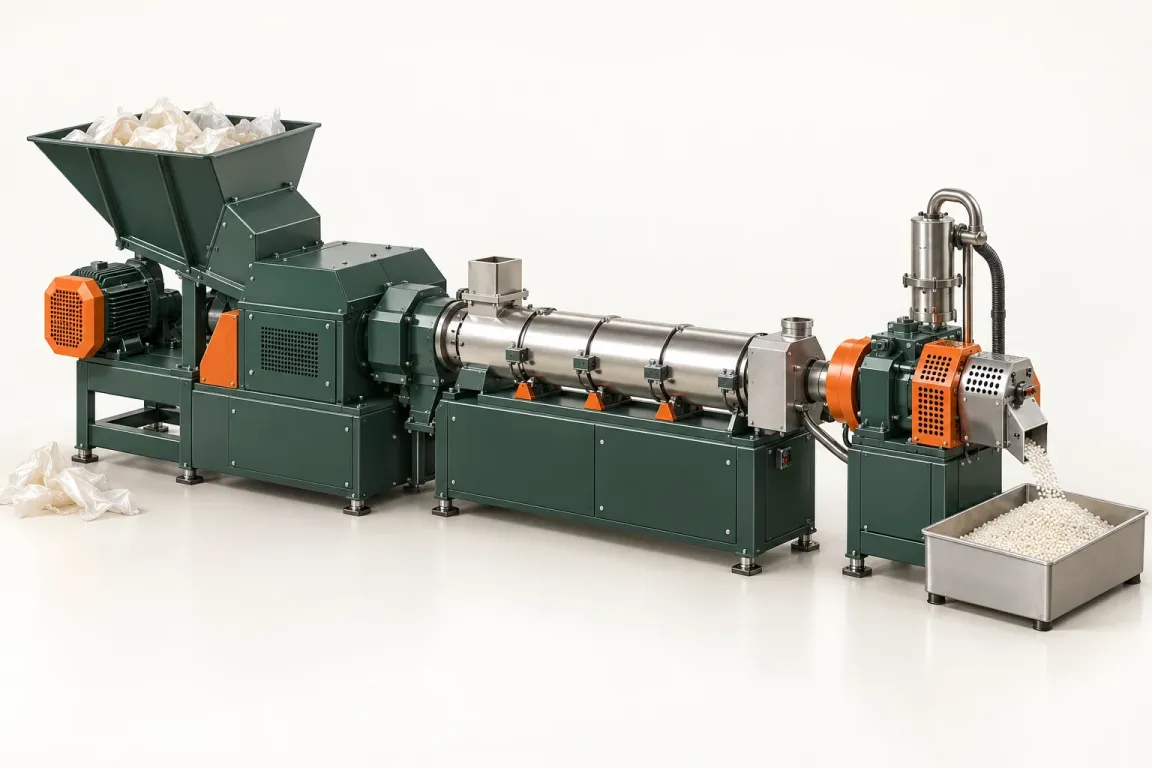
Conceptual visualization of a film scrap reprocessing and pelletizing line.
Representative visualization of the production process.

RECYCLING

Production scrap back into raw material.

In plastic bag production, scrap can arise during the film and cutting stages. Suitable production scrap can be processed in recycling machines into regranulate and reused as recycled raw material.

This way, resources are used more carefully. Keep in mind that not all scrap can be reused in the same way; suitability depends on the material and the intended use of the final product.

Questions
on your mind.

A short starter guide
to understanding production.

What is the raw material of plastic bags?

One of the most common raw materials is polyethylene (PE). HDPE, LDPE and LLDPE grades can be used alone or in blends, depending on the intended use and the desired properties of the product.

What is the difference between HDPE and LDPE?

HDPE generally gives a stiffer, crinklier film; LDPE gives a softer, more flexible one. The properties of the final product are assessed together with the blend, film thickness and production conditions.

Why does bag thickness matter?

Thickness affects material consumption, feel and performance. The right value is chosen by considering the product to be carried, the dimensions, the raw material and the seal design together.

Can every plastic bag be printed?

Printability depends on the film structure, surface treatment, ink and printing method. That is why the design should be assessed together with the production conditions.

Can recycled raw material be used?

It can, depending on the product requirements and the area of use. The source and technical suitability of the material should be assessed; the same formulation is not suitable for every application.

What machines are needed to produce plastic bags?

The basic line consists of a film extrusion machine that turns granules into film and a bag cutting and sealing machine that turns film into bags. If printed bags are required, a flexographic printing machine is added in between. Recycling machines can be used to turn production scrap back into raw material.
CONTACT

The right start
for your production.

Write to Hopan for your polyethylene raw material needs. For film extrusion, bag cutting and recycling machines, you can visit the Özmak website.

info@hopan.com.tr